Why Hungary?
Hungary offers one of the most favorable business environments
StartupBlink's new index examines the business environment for innovators in 125 countries along 3 pillars:
- Ease of operating a business
- Business incentives
- Market perception
Hungary ranks 11th globally in the “Business incentives” pillar, due to its attractive tax and funding environment. Our rank is no. 1 among OECD countries in the area of taxation.
Hungary provides hugely favorable conditions for businesses, especially for research-intensive companies- It boasts the lowest corporate tax rate within the European Union, set at 9%.
- Furthermore, Hungary provides various tax incentives for conducting research and development (R&D) activities.
- Hungary also provides cash grants for corporates who bring R&D activities and investments to Hungary.
- Convertible note regulation (since 2023)
- One of Europe's most favourable ESOP regulation (since 2024)
- Tax-free IP apport to businesses (since 2025)
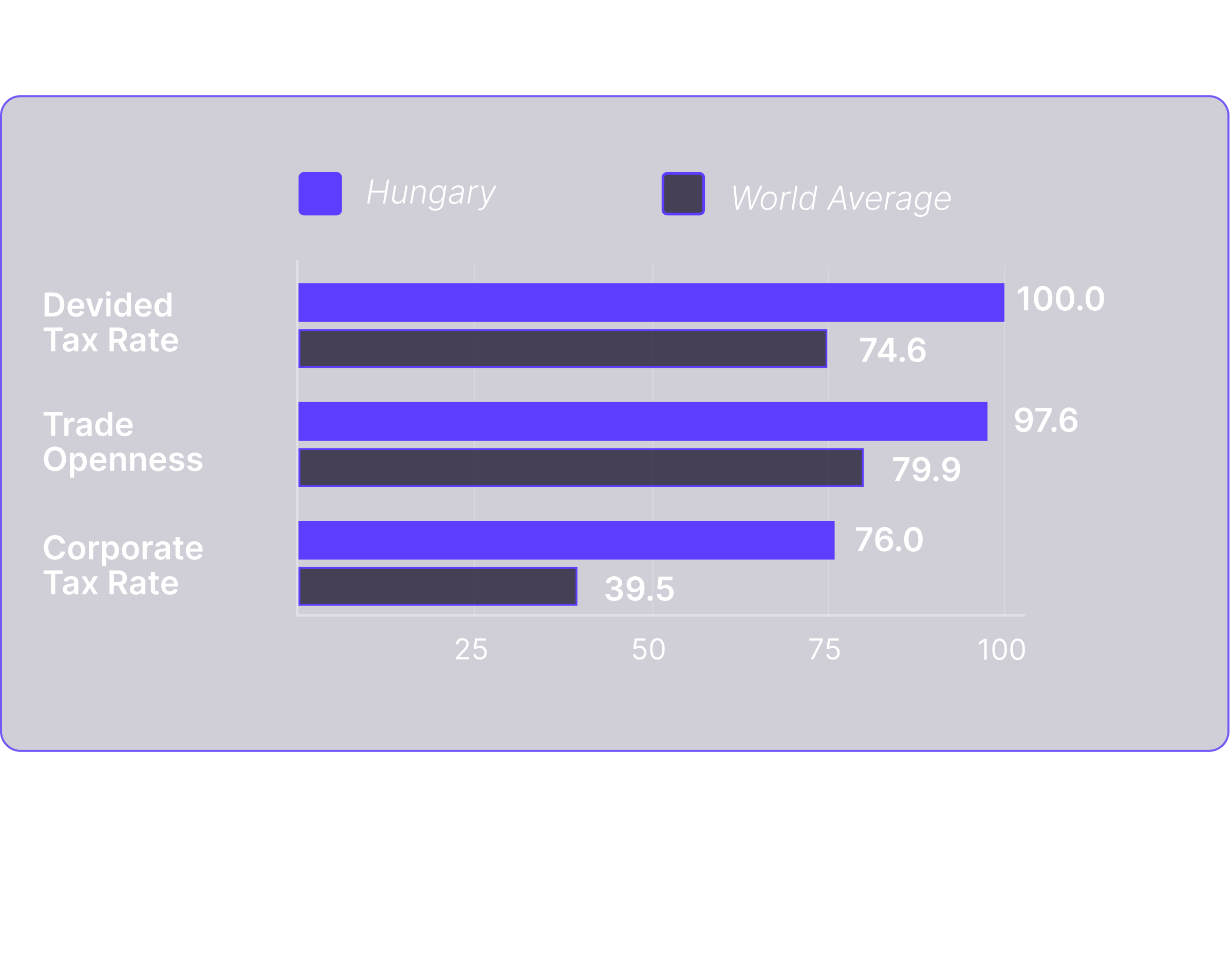
*the highest available score is 100.
Hungary's technological talent pool is highly competitive
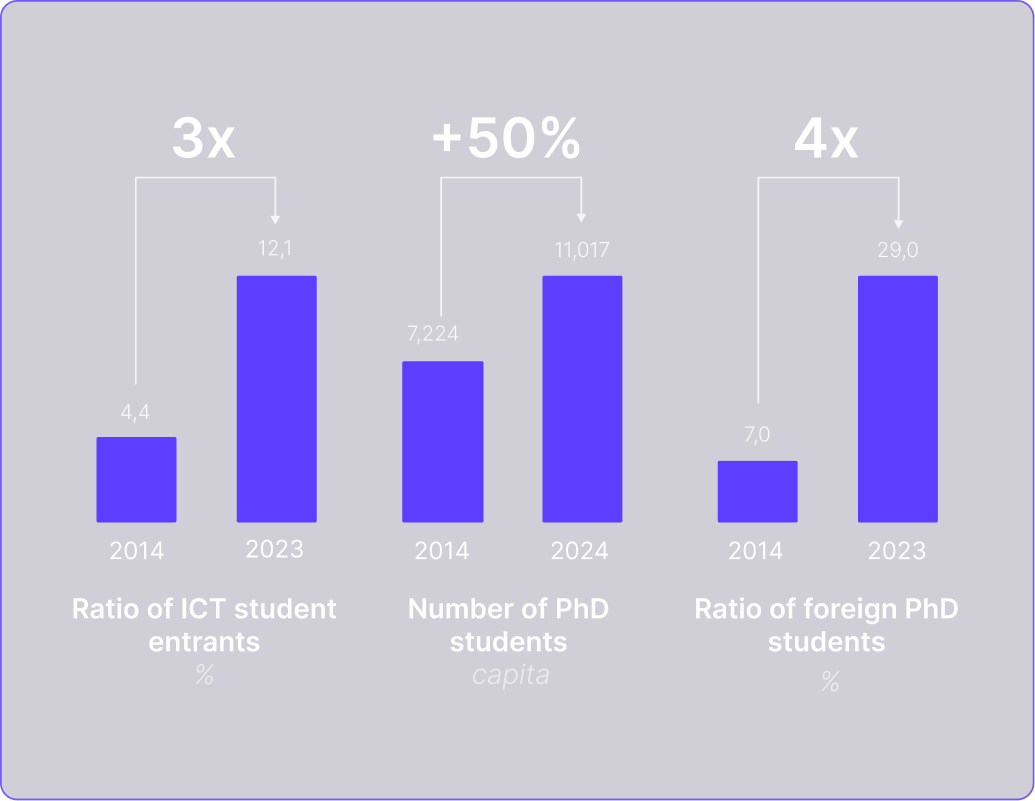
The ratio of The ratio of ICT students enrolling to bachelor programmes currently stands at 12%(increased from 4% in 2014).
- The number of PhD students has increased by more than 50% in the last 10 years.
- The ratio of foreign PhD students among total PhD students is 29% (up from 7% in 2014).
In addition to fostering technological expertise, Hungary places significant emphasis on developing entrepreneurial talent. Approximately 20,000 university students have completed the countries flagship entrepreneurship program: the Hungarian Startup University Program (HSUP). To further encourage entrepreneurial initiatives, two newly established programs have been introduced: HSUP BASE, aimed at high school students, and Pathway to Business, designed specifically for PhD students.
Hungary's academic sector's strong scientific performance
The performance of Hungarian universities and research institutions has demonstrated significant improvement in recent years.
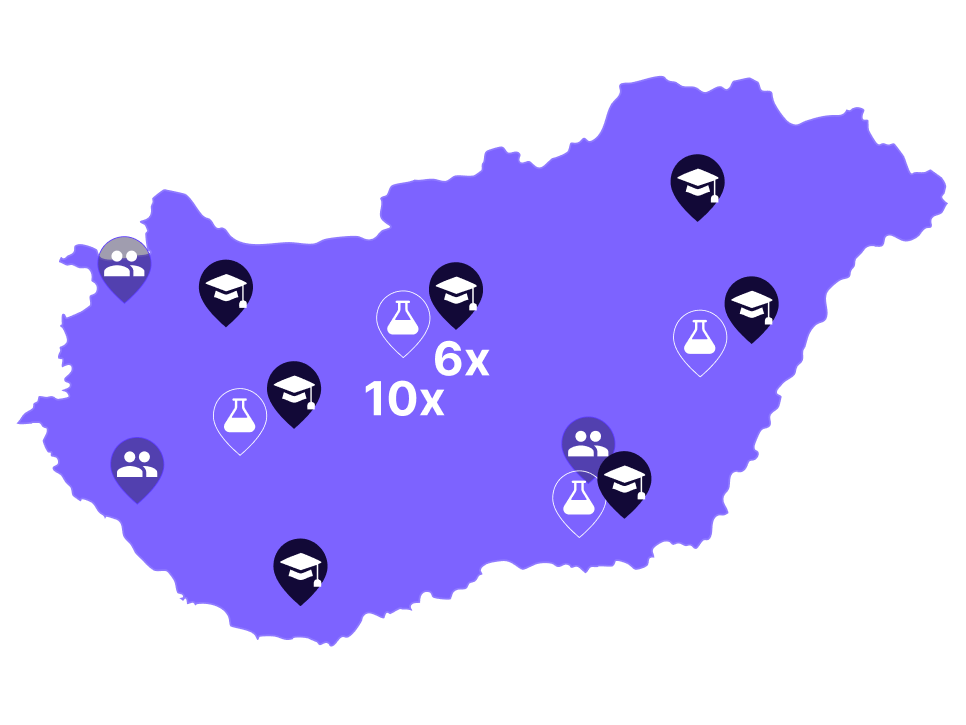
Over the past five years, these institutions have begun to ascend in global rankings, with 12 universities now positioned among the top 5% worldwide.
There is an increasing strategic emphasis on innovation within the academic sector- in 2024, the total research and development expenditure in Hungarianuniversities and research institutions reached 650 million EUR.
Recent initiatives related to technology transfer include the establishment of Technology Transfer Companies (TTCs), Science Parks, and Deep Tech Venture Capital funds.

HUN-REN Research Centers

Key Research Infrastructures

TOP 5% universites
Constantly increasing investments is R&D
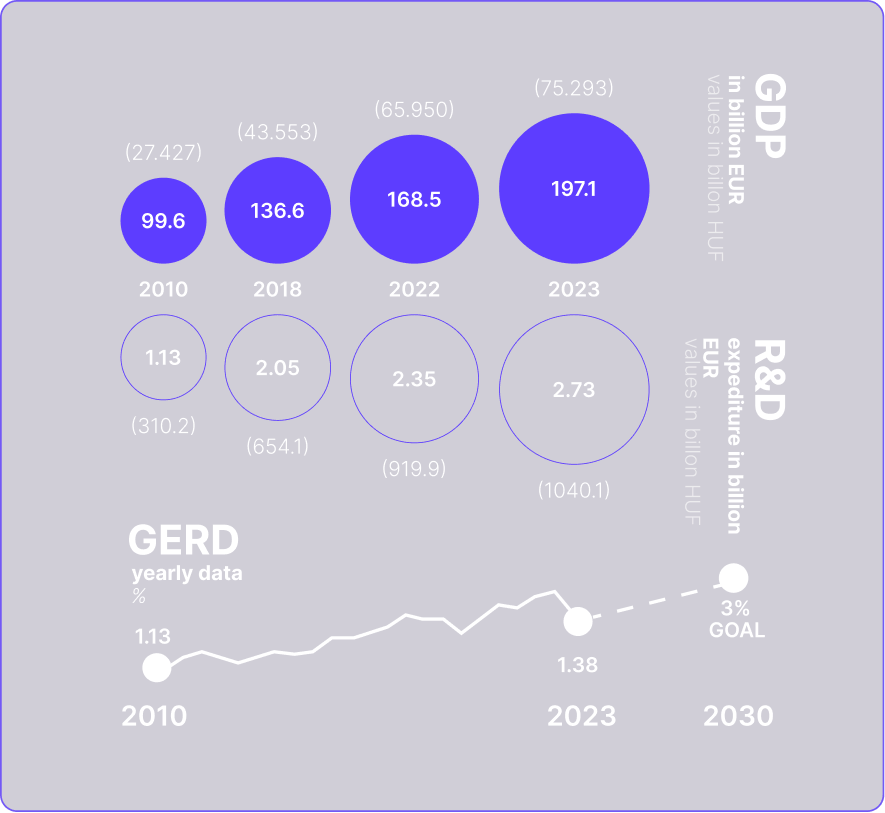
There has been a consistent increase in public investment in research and development.
Between the years 2000 and 2022, total research and development expenditures have tripled (in PPP USD).
Currently, the Gross Domestic Expenditure on R&D stands at 1.4%,with a target of reaching 3% by 2030.
Large multinational corporates play a decisive role in Hungary's innovation ecosystem bringing their R&D centers to Hungary
Over the past 15 years, Central and Eastern Europe (CEE) has substantially enhanced its economic significance within the European Union. Situated at the heart of the CEE region,Hungary has emerged as a favoured destination for foreign research and development investments, as well as for multinational corporations.
Hungary's foreign direct investment (FDI) attractiveness is ranked among the best globally, successfully attracting research and development (R&D) centres in the automotive, information technology, and healthcare sectors.
Over the past decade, the number of R&D personnel has increased by more than 89,7%, while the R&D expenditure of multinational corporations has risen from €800 million to €2 billion.